
Understanding the zeta potential of nanoparticles, emulsions, and suspensions is crucial for ensuring their stability and performance in various applications.
By analyzing the surface charge of these colloidal systems, researchers can predict their behavior, interactions, and long-term stability electrophoretic mobility.
This article explores the significance of zeta potential analysis, factors influencing it, and the diverse applications where this knowledge is indispensable.
Stay informed on the key principles and techniques for accurate zeta potential measurements in complex colloidal systems.
Key Takeaways
- Zeta potential analysis is crucial for understanding the behavior of nanoparticles, emulsions, and suspensions.
- Zeta potential influences stability, dispersion Lab Alliance, and interactions of colloidal systems.
- High zeta potential enhances stability by preventing agglomeration, while low zeta potential values may lead to particle aggregation.
- Zeta potential measurement techniques such as electrophoretic light scattering, laser Doppler velocimetry, and electroacoustic methods offer valuable insights into the surface charge of colloidal systems for understanding stability and interactions.
Importance of Zeta Potential Analysis
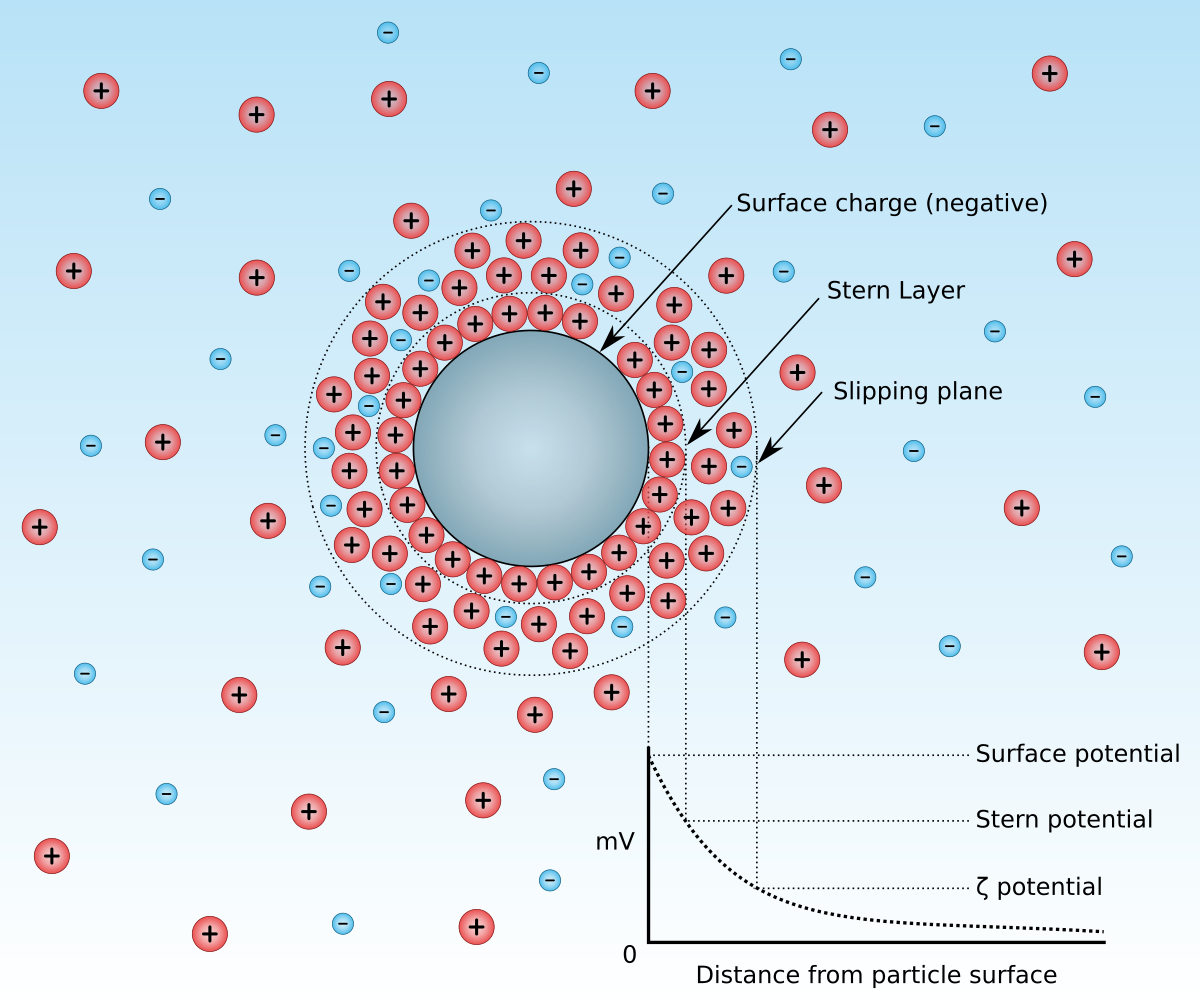
Highlighting the significance of zeta potential analysis is essential for understanding the behavior of nanoparticles, emulsions, and suspensions in various applications. Zeta potential, a measure of the electrostatic potential at the slipping plane of particles, influences the stability, dispersion, and interactions of these colloidal systems. By analyzing zeta potential, researchers can predict and control the aggregation or dispersion of particles, emulsions, and suspensions.
This understanding is crucial in industries such as pharmaceuticals, cosmetics, and food, where the stability and performance of products are paramount. Furthermore, zeta potential analysis aids in optimizing processes like drug delivery, formulation stability, and wastewater treatment.
Factors Influencing Zeta Potential
The zeta potential of nanoparticles, emulsions, and suspensions is influenced by a variety of factors that play a critical role in determining their behavior and stability in colloidal systems. The surface charge of particles, pH of the medium, ionic strength, temperature, and presence of surfactants or dispersants are key factors affecting zeta potential.
Surface charge directly impacts the electrostatic repulsion between particles, influencing their dispersion or aggregation. pH influences the ionization of functional groups on particle surfaces, altering their charge. Ionic strength affects the screening of charges, impacting zeta potential values. Temperature variations can modify the viscosity of the medium, influencing zeta potential measurements.
Additionally, surfactants and dispersants can adsorb onto particle surfaces, altering their charge and zeta potential. Understanding these factors is crucial for controlling the stability and behavior of colloidal systems.

Zeta Potential in Nanoparticle Stability
An essential aspect of nanoparticle stability lies in the zeta potential measurement, which provides insights into the electrostatic forces governing particle interactions. Zeta potential values indicate the magnitude of repulsive or attractive forces between nanoparticles, influencing their dispersion and aggregation behavior.
Nanoparticles with a high zeta potential (either positive or negative) tend to repel each other, enhancing stability by preventing agglomeration. Conversely, low zeta potential values may lead to particle aggregation, compromising stability.
Applications of Zeta Potential
Applications of Zeta Potential encompass a wide range of industries and research fields, indicating the versatility of this electrokinetic property.
In pharmaceuticals, zeta potential measurements aid in understanding drug delivery systems’ stability and efficacy.
The food and beverage industry utilizes zeta potential to enhance emulsion stability, ensuring product quality.
In environmental science, it helps in wastewater treatment processes by facilitating the removal of contaminants.
Zeta potential is also crucial in the field of cosmetics to improve product formulation and stability.
Moreover, in materials science, it assists in optimizing the production of nanomaterials with desired properties.
The diverse applications of zeta potential highlight its importance in various sectors, showcasing its significance in ensuring product quality and process efficiency.
Zeta Potential Measurement Techniques
Utilizing specific instrumentation and methodologies, researchers employ various techniques to measure zeta potential in nanoparticles, emulsions, and suspensions. Common methods include electrophoretic light scattering, laser Doppler velocimetry, and electroacoustic methods.
Electrophoretic light scattering measures the velocity of charged particles under an electric field, providing zeta potential calculations. Laser Doppler velocimetry assesses the Doppler shift of scattered light to determine particle mobility and zeta potential. Electroacoustic methods analyze the particle-induced acoustic signals in response to an applied electric field to quantify zeta potential.
These techniques offer valuable insights into the surface charge of colloidal systems, aiding in understanding stability, interactions, and behavior in various applications.
Conclusion
In conclusion, zeta potential analysis plays a crucial role in understanding the stability of nanoparticles, emulsions, and suspensions.
By measuring the zeta potential, researchers can assess the interactions between particles and their dispersion medium, leading to insights into the physical and chemical properties of colloidal systems.
Factors influencing zeta potential must be carefully considered when interpreting results, and various measurement techniques are available for accurate analysis in diverse applications.
…